Collecting guest photos
Wedding menu card ideas and wording for your wedding breakfast
10 November 2026 · 4 min read
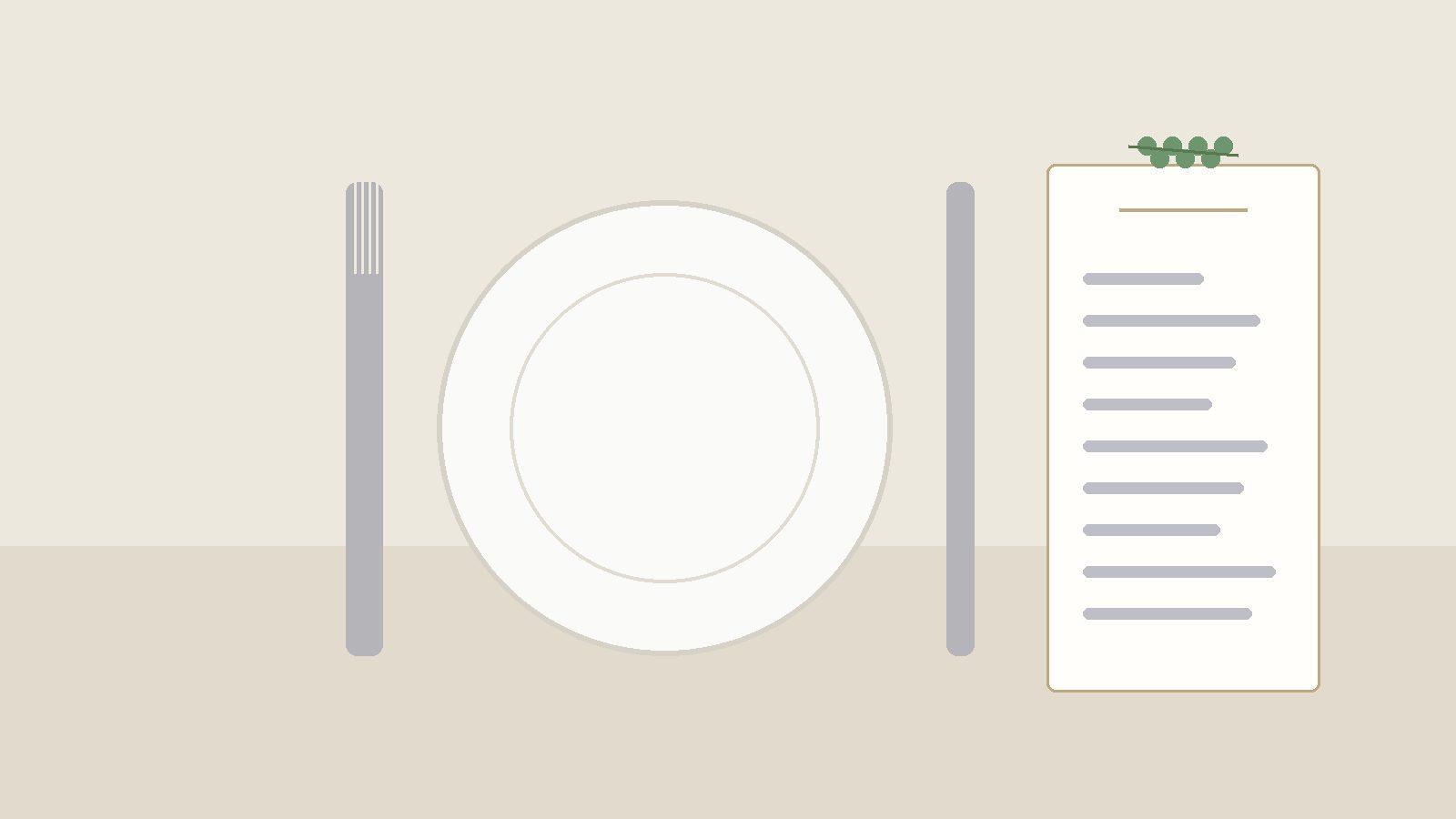
The short answer: a wedding menu card lists each course of your wedding breakfast in order (to start, main, pudding), with one short line per dish and a note for dietary options. Put the heading, your names and the date at the top, keep descriptions to a few words, and match the font and colour to the rest of your stationery. Choose between one card per place setting, one per table, or a single large board, depending on your budget and how formal the day is. Allergen details are your caterer's job; the card can simply point guests to them.
A menu card does two jobs: it tells guests what is coming, and it is often the most photographed piece of paper on the table. Here is how to word it, lay it out and make it fit your day.
What goes on a wedding menu card
From top to bottom:
- A heading. "Wedding Breakfast", "Dinner" or "The Menu".
- Your names and the date. "Sophie & James, 14 August 2027".
- The courses, in order. Each with the dish name and a short description.
- Drinks (optional). The toast drink and the wine with dinner.
- A dietary line. For example: "Please speak to a member of our team about allergens."
- A closing line (optional). "Eat, drink and be married."
Wording examples by style
Classic
Wedding Breakfast
To Start: Ham hock terrine, piccalilli, toasted sourdough
Main: Roast sirloin of beef, Yorkshire pudding, seasonal vegetables, red wine jus
Pudding: Sticky toffee pudding, clotted cream
Coffee and petits fours
Relaxed, sharing style
Let's Eat
On the table: Bread from the village bakery, whipped butter, olives
To share: Slow-roast lamb shoulder, crispy potatoes, garden salad
Something sweet: Eton mess, made for the middle of the table
Short and modern
Starter | Burrata, heritage tomatoes, basil
Main | Pan-roasted chicken, wild garlic, new potatoes
Pudding | Lemon tart, raspberries
Evening food
Later On
Bacon and sausage baps, chips in cones, a cheese table
Use full sentences only if your style is chatty; otherwise, short lines read best on a small card.
Naming the courses
British menus have their own vocabulary. Pick one set of words and stick to it:
| Formal | Relaxed | Playful |
|---|---|---|
| To Start | Starter | First things first |
| Main Course | Main | The main event |
| Pudding | Pudding | Something sweet |
| Cheese | Cheese board | And finally |
Dietary options and allergens
If you offer set choices (meat, fish, vegetarian), list all of them and mark them simply, for example with (V) and (VG), plus a key at the bottom.
Allergen information is a legal job for the caterer, not something you need to print in full. GOV.UK guidance from the Food Standards Agency says that if you provide non-prepacked foods, you "must supply allergen information for every item that contains any of the 14 allergens" (applies to England, Northern Ireland and Wales). A clear line on the card that points guests to the catering team is enough, as long as your caterer has that information ready.
Place card, table card or one big board?
| Option | Good for | Watch out for |
|---|---|---|
| One card per guest | Formal days, keepsakes | More printing, more paper |
| One card per table | Most weddings | Needs a stand or holder |
| A large board or mirror | Relaxed days, buffets | Guests may not read it |
| Menu on the back of the place card | Saving paper | Less room for wording |
Eight design ideas
- Name and menu in one. Print each guest's name at the top of their menu, so it doubles as the place card.
- Tuck it into the napkin. A narrow card folded into a linen napkin looks neat and saves table space.
- A sprig on top. Rosemary, lavender or eucalyptus tied with twine.
- Vellum overlay. A translucent layer with your names over the printed menu.
- Handwritten mirror. One large menu written on a mirror at the entrance to the room.
- Seasonal colour. Sage and cream in spring, terracotta in autumn, deep green for a Christmas wedding.
- A line about the food. "Our caterer grew up in the next village" or "James's grandmother's recipe."
- Your table plan on the same paper. Match the menu to your seating plan; the wedding seating chart maker helps you get the tables right first.
Checklist before you print
- Final menu confirmed in writing with the caterer
- Dish names spelled exactly as the caterer writes them
- Dietary symbols and a key
- A line pointing guests to allergen information
- Names and date checked by someone else
- A few spare cards for late changes
Menu cards in your photos
Menu cards turn up in guests' photos more than you would think: the table before everyone sits down, the toast, the pudding arriving. If you want to see all of those, give guests one place to share them. Pixavo has print material for exactly that: "Fill in your names, pick a colour and print." Your QR code sits on the table card next to the menu, and afterwards you download everything and keep it yourself. Plans are one-off: Basic £49, Premium £79 and Premium Plus £139 (our UK pricing page on 10 November 2026). See the UK plans.
Want the bigger picture on timing and courses? Read what a wedding breakfast is.
FAQ
What do you write on a wedding menu card?
A heading, your names and the date, each course in order with a short description, any dietary symbols and, if you like, the drinks.
Do you need a menu card for every guest?
No. One per guest feels formal and doubles as a keepsake; one per table or a single board works just as well.
Should allergens be printed on the wedding menu?
Not in full. Your caterer must have allergen information for every dish; a line on the card can point guests to the catering team.
What is the British word for dessert on a menu?
"Pudding" is the traditional British choice, though "dessert" is also used.
When should menu cards be printed?
After the caterer has confirmed the final menu in writing, usually a few weeks before the wedding.
Get your album ready
One QR code, no app, and every photo and video from your guests in one living album.
Read next
What is a wedding breakfast? Timing, menu and running order
A wedding breakfast is the first meal after the ceremony, rarely at breakfast time. What it means, when it happens, menu ideas and where the speeches go.
4 min read
An unplugged wedding ceremony: how to ask for it (and why your guests will thank you)
Want a phone-free ceremony without guests missing out on photos? Polite sign wording, why photographers beg for it, and the plan where nobody misses a thing.
3 min read
Live wedding photo slideshow: setup, screen and pre-approval
Run a live wedding photo slideshow: what you need, where to show it, pre-approving uploads, screen and network setup, speech pauses and a checklist.
6 min read