Collecting guest photos
Disposable cameras at your wedding: charming or a false economy?
Updated 28 August 2026 · 3 min read
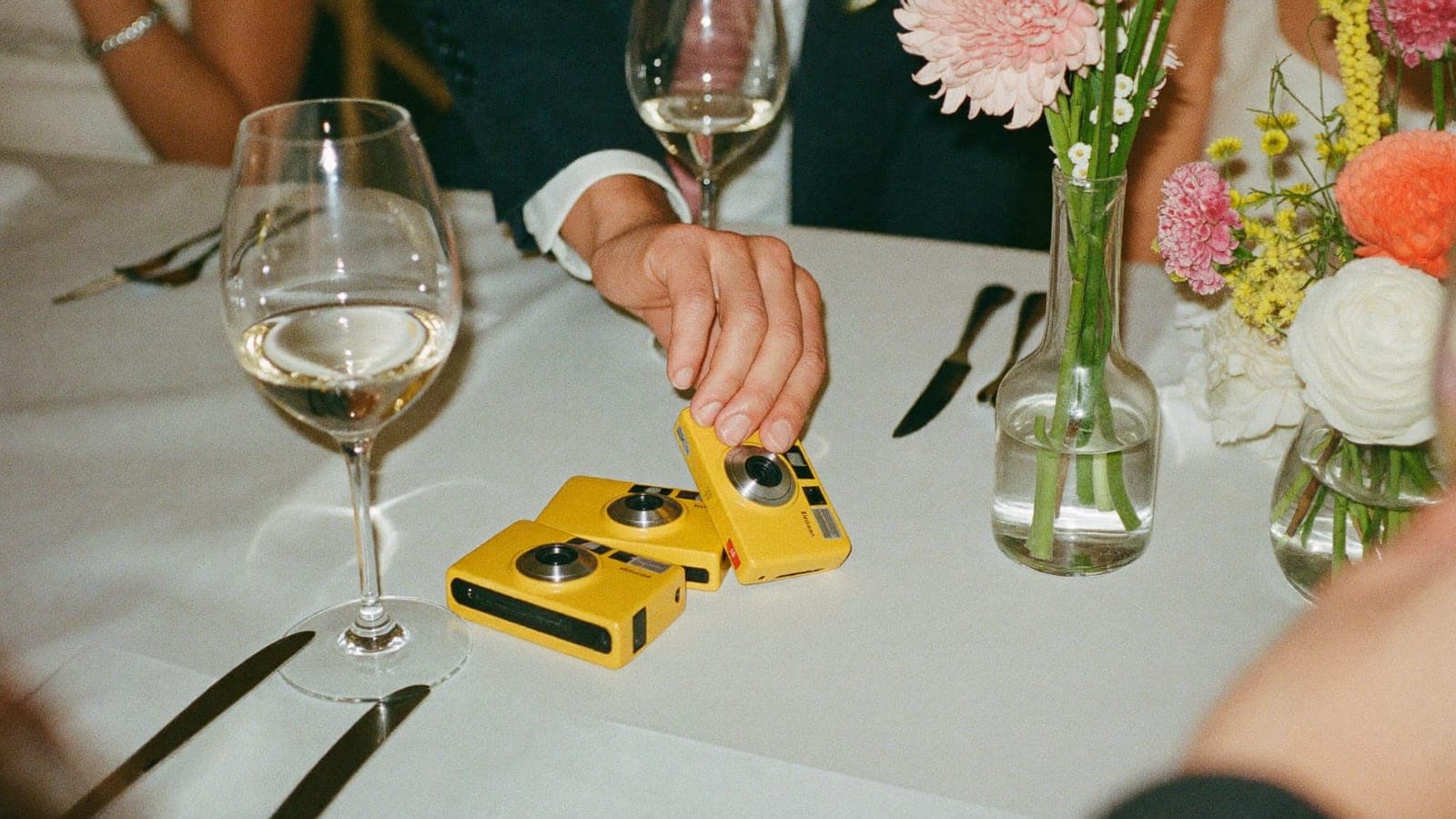
Disposable cameras on the tables. The idea comes up in nearly every wedding plan, and honestly, it has something. The click, the winding wheel, the surprise weeks later. Film is properly back, and those grainy flash photos have a look no filter can fake.
But there is a gap between the romantic idea and the practice. Here we work through it honestly: what it costs, what you actually get back, and when it is (and is not) worth it.
Why everyone wants them
The appeal is obvious:
- Nostalgia and atmosphere. Analogue photos have their own aesthetic, and the cameras themselves make good table decoration.
- They are physical. A camera in your hands invites something different than a phone does.
- The surprise. You only find out weeks later what is on them.
That last point is also the biggest risk.
What it really costs
Run the numbers for a wedding with ten tables:
| Cost | Estimate |
|---|---|
| 10 disposable cameras (27 shots each) | €120 to €180 |
| Developing and scanning (10 rolls) | €100 to €150 |
| Total | €220 to €330 |
That buys you a maximum of 270 photos. In theory. In practice:
- Some cameras never get finished. Guests forget them, or feel awkward clicking away.
- Indoor shots without enough flash fail. Disposable cameras have a short range; the flash reaches two to three metres. Reception rooms are dark, so plenty of shots come back black or blurred.
- You get no video. The speeches, the first dance, the noise: no moving image at all.
- It takes weeks. Developing and scanning takes time, especially in wedding season.
There are no hard published statistics from photo labs, but ask around among couples who did it and you hear the same thing: of 270 possible shots, a few dozen genuinely good ones survive. That makes it one of the most expensive options per usable photo.
The digital alternative
Compare that with a QR code photo album: guests scan a code on the table card and upload unlimited photos and video from their own phone. Modern phone cameras perform well in dark rooms, you see everything the same evening, and it costs €59 to €149 one-off, less than the cameras alone.
| Disposable cameras (10) | QR photo album | |
|---|---|---|
| Cost | €220 to €330 | €59 to €149 |
| Number of photos | max 270, some failed | unlimited |
| Video | no | yes |
| Quality in a dark room | poor | good |
| Results visible | after weeks | immediately |
| Risk | rolls lost or unused | album shareable and backed up |
Or do both, but sensibly
It does not have to be either/or. The combination that works well:
- Two or three disposable cameras in strategic spots (the bar, a photo corner) for the analogue feel and the surprise afterwards
- A QR album as your main channel, where all the phone photos and videos land
That way you get the nostalgia without depending on it, and you know the day comes back to you in full. Do give the cameras a clear card ("Snap away, we will get it developed!"), otherwise they sit untouched.
Conclusion
Disposable cameras are lovely as an extra and risky as a plan. For the price of the cameras alone you can have a complete digital album where guests upload unlimited photos and video, in full quality and visible the same evening.
Want all the options side by side? Read 7 ways to collect wedding photos from your guests or the complete guide to wedding photo sharing.
Ready to sort it? Create your Pixavo album in five minutes, from €59, one payment.
Get your album ready
One QR code, no app, and every photo and video from your guests in one living album.
Read next
QR code wedding photo album: how does it work?
With a QR code photo album your wedding guests upload all their photos to one place, no app needed. How it works, what it costs, what to look for.
4 min read
7 ways to collect wedding photos from your guests
WhatsApp, shared album, WeTransfer, disposable camera or QR album? The 7 ways to collect wedding photos from your guests, honestly compared.
5 min read
Wedding photo sharing with guests: the complete guide
How to collect every photo your guests take at your wedding. Every method compared, the wording that works, and how to set it up without an app.
4 min read